
7-minute read
This is the third post in a four-part series adapted from a talk I gave on ADHD and emotion regulation. In the last two posts, I walked through what’s happening physiologically inside a kid’s brain — the neurotransmitter deficits, the underdeveloped prefrontal cortex, the working memory that can get flooded by a single strong feeling. Now I want to bring that down to ground level: what does emotion dysregulation actually look like when it’s happening in front of you, and what tends to set it off?
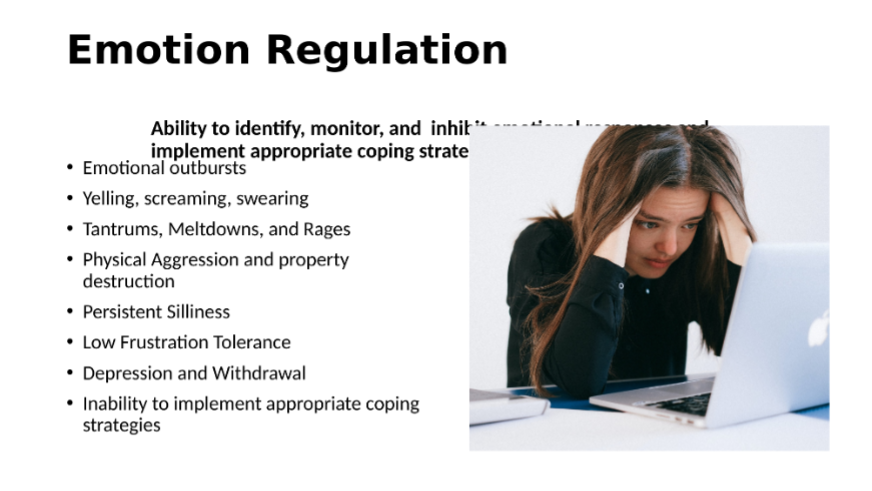
Emotion regulation, in clinical terms, is the ability to identify, monitor, and inhibit emotional responses, and to put coping strategies into practice. That’s a clean definition. In real life, with a real kid, it looks a lot messier. It can show up as yelling, screaming, or swearing. It can show up as full tantrums, meltdowns, or rages, and sometimes as physical aggression or property destruction. It can also show up in quieter ways that get missed entirely — persistent silliness that’s really a cover for discomfort, a frustration tolerance so low that a small annoyance becomes a full-blown crisis in seconds, or withdrawal and low mood when a child simply doesn’t have a coping strategy available and shuts down instead of acting out. All of these are the same underlying problem wearing different faces: the inability, in that moment, to implement an appropriate coping strategy.
What Russell Barkley Gets Right
Russell Barkley is sometimes called the godfather of ADHD — he writes the graduate-school textbooks on the subject — and one of his observations has stuck with me more than almost anything else I’ve read. He points out that it’s not that the emotions people with ADHD experience are inappropriate. It’s that they’re more likely to publicly display the emotion than someone else would be. They seem less able to internalize their feelings, to keep them to themselves, or to moderate them the way others manage to.
I want to sit with that for a second, because I think it reframes the whole conversation. This is normal for them. Our job isn’t to eliminate the emotion — it’s to figure out how to accommodate it while still holding the line that acting out inappropriately isn’t okay. Understanding that the intensity itself is normal, even if the expression needs work, should give you some patience and grace, along with room to actually train for the future instead of just reacting to the present moment.
Common Triggers Worth Knowing
It’s worth sitting down and identifying what specifically sets off your particular child, because the triggers are often more predictable than they feel in the moment.
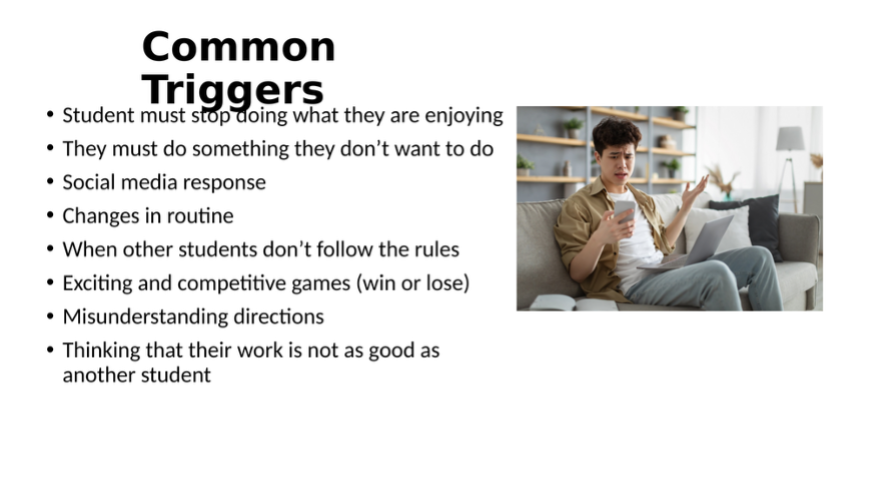
Social media is one of the most common ones I see. A student can be making real, solid progress on homework, get a notification, and within seconds be in despair, or furious, or confused, or hurt. This often happens right as they’re winding down for the night — a message comes in at one in the morning, they get triggered all over again, stay up until three, and show up the next day emotionally out of control and running on no sleep.
Kids with ADHD also tend to be quite legalistic about rules. Because they work so hard to follow the rules themselves, it genuinely bothers them when other people don’t — and that can set off a disproportionate reaction. Competitive games are another common trigger, whether they’re winning or losing. They haven’t yet developed the ability to slow themselves down and manage their own intensity in the middle of that kind of stimulation. Having to stop an activity they’re enjoying, or being told to do something they don’t want to do, can trip the same wire.
Other Challenges That Contribute
A few other things layer on top of the core ADHD symptoms and make emotion regulation even harder.
Processing speed is one I know personally, through my daughter. She has a processing-speed difference, and growing up, she thought she simply wasn’t smart — because her older brother, who struggled badly with emotion regulation, was quick-witted and sharp-tongued with her. She couldn’t compete with his fast, sarcastic remarks in real time. She’d think things through more slowly and respond later, and because he reacted so strongly whenever she did retaliate, the whole family’s attention would shift to his reaction instead of to what had actually started it. It wasn’t until she learned about her own processing-speed difference that she began to understand why things hadn’t come as quickly to her as they seemed to for everyone else. She’s since earned her doctorate and joined our clinic as a psychologist — but I genuinely wish I had understood her processing differences better back when it mattered most.
Reading facial expressions and body language is another piece. Teenagers in general only read facial expressions accurately about half the time, compared to roughly 90 percent for adults with a fully developed prefrontal cortex. Layer ADHD on top of that normal adolescent immaturity, and reading faces and body language becomes even harder — which creates real social friction, often without the child understanding why.
Distractibility plays a role too. A conversation can get interrupted by something else catching your child’s attention entirely, and the friend or family member on the other end can feel ignored or dismissed — even though, most of the time, the child isn’t even aware they looked away mid-sentence.
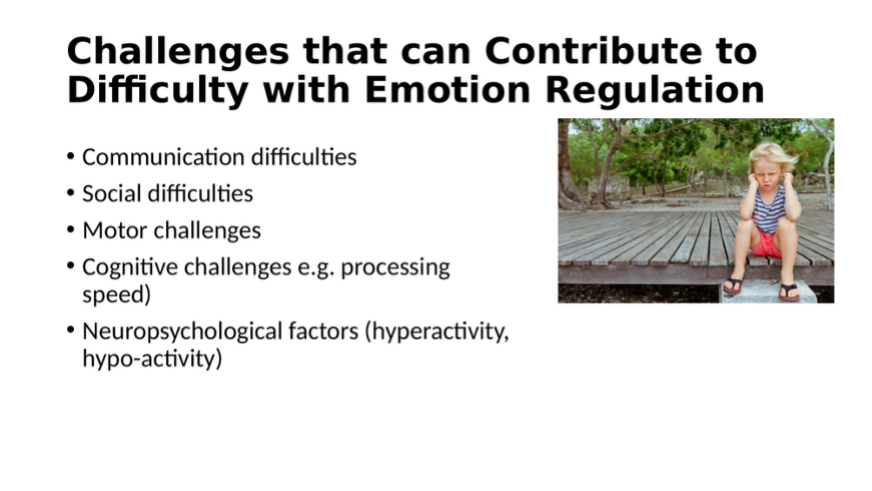
Communication difficulties, social difficulties, motor challenges, and swings between hyperactivity and low activity all add their own layer on top of everything else. None of these show up in isolation — they compound each other, which is part of why the same trigger can look small on one day and set off a full meltdown on another.
Seeing the Pattern
Put all of this together — the intensity Barkley describes, the predictable triggers, and the layered challenges of processing speed, social reading, and distractibility — and you start to get a full picture of why these moments happen as often, and as intensely, as they do. None of it is a character flaw, and none of it means your child isn’t trying.
The good news is that once you can see the pattern, you can actually do something about it. That’s what I want to walk through next: the specific strategies and tools that help kids build real, lasting emotion regulation skills.
Key Takeaways
• The intensity of your child’s emotional display isn’t the problem to fix — how they express it is.
• Triggers are far more predictable than they feel in the moment; identifying your own child’s specific list is one of the most useful things you can do.
• Struggles that look like emotion regulation problems are sometimes something else entirely — a processing-speed difference, trouble reading facial expressions, or plain distractibility — and telling those apart changes how you respond.